Chris Detzel (00:00)
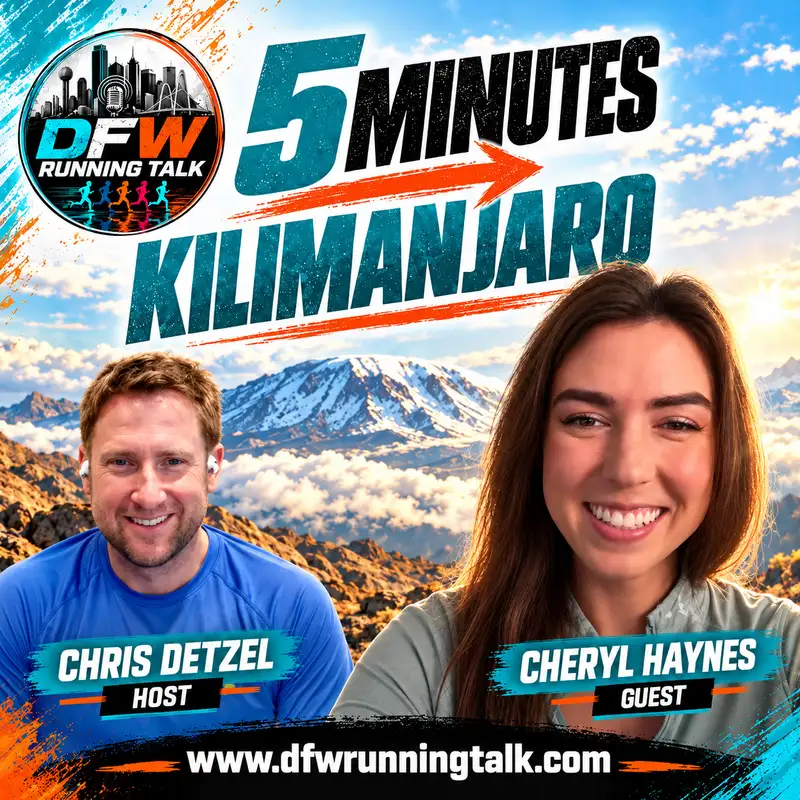
All right, welcome to another DFW running talk. I'm Chris Detzel, and today's special guest is Cheryl Haynes. Cheryl, how are you doing?
Cheryl Haynes (00:07)
Hi, Chris. Good, good. How are you?
Chris Detzel (00:09)
Doing well. And you know, it's it's funny because the way we met was we don't really know each other, to be honest. But you
Cheryl Haynes (00:15)
Right, yeah.
Chris Detzel (00:17)
reached out to me on Instagram and you're like, hey, you know,
Cheryl Haynes (00:19)
Yeah.
Chris Detzel (00:20)
I would love to tell my story and and would love to talk about running and and so here we are. So I'm excited to talk to you a little bit about running. Let's let's get right into it. What's when
Cheryl Haynes (00:30)
Yeah.
Chris Detzel (00:30)
did you you know, did you run in high school or college or what you know, what was that like?
Cheryl Haynes (00:35)
No, not at all. yeah, good question. So I basically I wasn't I didn't run at all in in high school, college. I was not athletic at all. in fact in high school I just stayed a couple of years in the marching band and that was
Chris Detzel (00:49)
Sure.
Cheryl Haynes (00:50)
the that was the extent of my, you know, just just marching never running. The flute. Yeah.
Chris Detzel (00:53)
What instrument did you play? I'm very interested in that. Okay. So I have
a s sixteen year old son, he just turned sixteen. And he plays the quads with the four drums or whatever and he loves it. He's obsessed with
Cheryl Haynes (01:06)
Yeah.
Chris Detzel (01:07)
band, so
Cheryl Haynes (01:08)
All right. Yeah, that's awesome. Yeah, I had a lot of fun there. and yeah, I pretty much I started running five well six years ago now. because
Chris Detzel (01:19)
Okay.
Cheryl Haynes (01:20)
it was 2020. I mean, I do remember doing maybe it was in middle school, I did like a 5k and I remember almost dying during the 5K.
Chris Detzel (01:27)
Mm. You're like, I don't never want to do that again.
So
Cheryl Haynes (01:30)
Yeah,
exactly, exactly. I was just pressured by a friend and it was some kind of fundraiser and you know that was the extent of that. but really I started in in 2020 and the purpose of starting to run was really to train for endurance.
For a different goal that I had. So I decided I wanted to climb Mount Kilimanjaro in Africa, which is the tallest mountain in Africa. It's
Chris Detzel (01:54)
Okay. Well definitely need a you definitely need endurance for that.
Cheryl Haynes (02:01)
yeah, exactly. Exactly. And I had no idea how to start training or how to build endurance at all. and I pretty quickly
realized like okay I can get a lot of training, endurance training if I start running, if I start building up, you know, my at the time I didn't even know like the different zones of training or anything, but I kind of figured out like, okay, zone two running, I can right. Yeah, yeah, exactly.
Chris Detzel (02:26)
Nobody does. When they start, you know.
Cheryl Haynes (02:31)
It it meant nothing to me
at the time. Yeah.
Chris Detzel (02:34)
Exactly. Zone two. Okay. Sounds good.
Cheryl Haynes (02:37)
Like what is what is that? Where what what does that mean?
and so I I think it this was I probably started trying to train around four months before Mount Kilimanjaro. And yeah. I would does this sound like a lot or
Chris Detzel (02:51)
Four months before? Wow. Okay. Now did you train here in Dallas or?
Yeah, I mean just thinking about like if you've had no training at all like to to climb a mountain like that doesn't sound you know, it sounds like a l a big mountain to climb.
Cheryl Haynes (03:06)
Yeah, yeah.
Which yeah, which actually it was the story of how I wanted to, you know, decided I wanted to climb that one. is also interesting. So I was basically doing a bit of a like a soul searching journey in my this was I was like 22, maybe 23. I was in Indonesia and in in Bali.
climbing a I decided to climb a volcano there, which I was, you know, had not previously been into hiking too much. and I climbed that in like beachware. Like like
Chris Detzel (03:40)
Really?
Cheryl Haynes (03:40)
I had no, you know, I was wearing sandals and, you know, just like a tank top and shorts. Anyway. And I met one woman, we were like the same age, around 23.
And she told me, like, yeah, I was just in Africa. I just climbed this mountain, Kilimanjaro. And I was like, What? You did it, because I thought that these big mountains were for, I don't know. I just I guess I had a picture of like you had to be tall and big, and maybe you had to be a man, or you know, you had to have some sort of crazy,
I I I don't know. I didn't, I just when I looked at her and she told me that she did it, I just thought like, if you could do it, then I could do it too, you know? So
Chris Detzel (04:22)
When I'm me. Yeah.
Cheryl Haynes (04:23)
totally inspired me. And so yeah, and I I had asked her about some of her training. And now that I recall, she had mentioned to me that she was running as well. she was doing half marathons and things, which at the time I just thought like that's insane. Like I could never do that.
Chris Detzel (04:39)
Right.
Cheryl Haynes (04:40)
but yeah, so I started training some months before. and I was just googling like training plans and and stuff like that. And so I went out and I think the first run, I think my target was a mile, and I thought like I could do a mile, right? Like I
could go
Chris Detzel (04:56)
Yeah.
Cheryl Haynes (04:56)
out and do a mile. I went out and ran about five minutes and I
did ha about half a mile.
In five minutes.
Chris Detzel (05:04)
At the start.
Cheryl Haynes (05:05)
And I said, okay, like we have a lot of work to do here. and before
Chris Detzel (05:10)
Mm-hmm. Mm-hmm. Just gotta start somewhere, you know?
Cheryl Haynes (05:16)
yeah, yeah, it's so true. It's so true. You you have to start somewhere. And I worked up to five miles during those months, and that was.
kind of the goal mileage in this training plan that I had, you know, found online or, you know, put together.
Chris Detzel (05:37)
Whatever, yeah.
Cheryl Haynes (05:38)
So and yeah, I worked up to the five miles and that was like a huge accomp accomplishment for me, just getting to to five miles. Like that was
Chris Detzel (05:47)
And you were just doing this yourself, nobody else was running with you or doing anything like that.
Cheryl Haynes (05:51)
Yeah.
No, no. And yeah, I was training completely alone. And this was also, you know, during the pandemic. So
Chris Detzel (05:59)
In government.
Cheryl Haynes (05:59)
yeah. And I was in South Florida at the time. I lived there five or almost six years, I think. So I was just when I was running, I was just, you know, alone on the on the street or in the parks. and
And to train for that mountain, I was also doing other like stairmaster and strength training, like I was doing other things, but the
Chris Detzel (06:21)
Yeah.
Cheryl Haynes (06:21)
running was just it it felt like a necessary part of like this is what I need to to train for endurance. And it definitely paid off. Like I ended up doing Kilimanjaro and then I got totally hooked on mountaineering, and I've done several mountains since then. And
Chris Detzel (06:38)
Let's talk about Kilimajoro because
a lot of times that's a a big that that's a big trip to go take, you know, because you really need to be, I assume, gone. You know, I mean it takes what, a few days to just to get there, number one, you know. And then
Cheryl Haynes (06:52)
Yeah. Yeah.
Chris Detzel (06:54)
you gotta whenever you climb to kind of the base, at the very least, you know, you start you have to spend a day or two or something like that at certain out parts of the altitude and then
You don't just go climb it and then hey, I'm I'm at the top, you know, from my understanding, you know. So tell me about that experience.
Cheryl Haynes (07:08)
Yeah. Yeah, that's exactly
that that's exactly right. and yeah, I think it took like the travel time was like twenty hours or something. It was just insane just getting there. and then, you know, I traveled there alone, like I went alone and I it's it's a little nerve wracking just getting picked up from this tiny airport in Tanzania, you know.
by
the someone just wearing a polo shirt for the guiding company that I was using and we're going off in a van. I'm like, okay, I hope this is legit.
Chris Detzel (07:42)
This twenty two year old one that's with no
one goes into a van with anyways. She did it.
Cheryl Haynes (07:48)
Yeah, yeah, right.
but you know, but it was yeah, but it as you can as you can see it everything ended well and it went great,
Chris Detzel (07:58)
You're here.
Cheryl Haynes (07:59)
but yeah, but you're exactly right. So because of the altitude, you have to spend some days acclimating before you go up that high. And feet, I think it's night.
It's 19,000 something feet and and meters, it's five thousand six hundred something meters. so we spent seven days in total, or seven and a half days. it's called the Lamosho route. And so yeah, we were just going slowly, like a little bit every day, hiking maybe five hours a day, something like that, five, six hours a day, just to acclimate. Yeah.
Chris Detzel (08:30)
How are you feeling to you know during look one thing I'll say because I think it's really cool is you you decided to start running so that you can go climb this mountain. So this this is a little different story because you know, most of the people they get into running and somehow, somehow, and then they start racing and they start doing a lot at that point, you know, racing really wasn't your thought. It was more of I gotta, you know, climb this big mountain. You know, it's a big deal. And you
Cheryl Haynes (08:54)
Yeah.
Chris Detzel (08:56)
said you're doing street training. So
It's a different view on why you would go run. So that to me is very interesting.
Cheryl Haynes (09:03)
Yeah, exactly. And I've also I've heard so many stories about why people get into running and you know, sometimes it is like there's what there's an ulterior motive, whatever that might be. And for me, mine was mine is the mountains. I mean, today I I love running just for the sake of it, but when
Chris Detzel (09:23)
Yeah.
Cheryl Haynes (09:23)
I started it was really motivated by like I just I want to summit this mountain and then I thought I would be
Done by but it became kind of digging.
Chris Detzel (09:32)
gotta keep going
to mountains, you know, different mountains, so you gotta run. You gotta keep that stamina going, you know. So and how long have you
Cheryl Haynes (09:38)
Yeah, exactly.
Chris Detzel (09:40)
lived in Dallas or I think you've lived in Grapevine, is that right? Or area? Okay.
Cheryl Haynes (09:44)
I'm in North Richland Hills.
yeah. And but I do go to the the Grapevine Lake runners and walkers. That's my run club. so
Chris Detzel (09:54)
Yeah. Do know Grace?
Cheryl Haynes (09:55)
yeah, yeah. It's
Chris Detzel (09:57)
Yeah, yeah. She's
super cool. I know her very well. she's a big fan
Cheryl Haynes (10:01)
Okay.
Chris Detzel (10:01)
of the podcast for sure, but so she's super nice and super helpful. So let's go ahead. Yeah.
Cheryl Haynes (10:04)
Cool. Awesome. Yeah. Yeah.
I know Grace. Yeah. shout out to Grace.
Yeah.
Chris Detzel (10:12)
Yeah, shout out to Grace. So
Cheryl Haynes (10:15)
But yeah, and I I grew up in North Richland Hills.
Chris Detzel (10:18)
Okay.
Cheryl Haynes (10:19)
but I've been gone for like over a decade really. I I pretty much I went off to
to university, I went to the University of Arkansas and then I transferred to the University of San Antonio. and after that I was living in other in other states. I I was in South Florida for several years. And then the past almost two years I was living in in Santiago, Chile in South America.
Chris Detzel (10:44)
What have you been
doing all all these places? What are you I mean, this is very intriguing.
Cheryl Haynes (10:49)
Yeah, it well
in South Florida, you know, I was I wanted to move there because I love scuba diving. So I'm I'm a I'm a hobbyist, you know. So I
Chris Detzel (11:01)
Yeah.
Cheryl Haynes (11:01)
have lots of you know, lots of hobbies like that, but I moved there and then just ended up getting a job there and and loved it. So I stayed there for several years and then
My last year that I was in South Florida, I attempted another mountain called Aconcagua, which is in Argentina.
Chris Detzel (11:20)
Let's back up.
Let's go back up. So I I definitely want to hear that story. But so you climb that first mountain and then
Cheryl Haynes (11:27)
Yeah.
Chris Detzel (11:27)
you get back. So I'm trying to do the journey thing, right? You know, and then so because
Cheryl Haynes (11:31)
Okay.
Chris Detzel (11:33)
it helps me to stay clear. So
Cheryl Haynes (11:35)
Yeah. No, good idea.
Chris Detzel (11:37)
so so you go there and you were living in South Florida then, but that was your very first mountain kind of thing, you start running from that. So when you get back, now how'd the mountain thing go? I mean, did you
climate, how'd you feel? Was it like, my gosh, this is super hard, you know.
Cheryl Haynes (11:51)
Yes, yeah. It was for me it it it was very difficult. It was like the summit day was quite a challenge. and that was the highest I'd ever been. I mean just in terms of the altitude and then also in
Chris Detzel (12:04)
Really happy.
Cheryl Haynes (12:05)
terms of sorry. Yeah, yeah,
Chris Detzel (12:07)
Really high for sure.
Cheryl Haynes (12:09)
exactly, exactly. and also
there's so we do the it's called the alpine start where you wake up in the middle of the night basically so we woke up around 11 p.m to do the summit push and that summit push was almost eight hours maybe seven to eight hours in the you know in the dark in the freezing cold and just
Slowly
hiking up and up and up, you know, nonstop, and you don't want to stop because it's it's so cold anyway. it was it was very difficult for me and I would say also a bit of a shock having never done something quite like that. But reaching the summit was just an incredible feeling. I mean that is one of
my favorite memories of of my life is you know that moment and I have you know some videos of being at the summit and I was like I was crying I was I was so happy just to
Chris Detzel (13:08)
That's awesome.
Cheryl Haynes (13:09)
have made it after you know so much time of like planning and you know it's also saving saving up for that.
trip and just working toward it and so yeah everything went well. I had no I had no real symptoms from the altitude, which was incredible as well.
Chris Detzel (13:27)
That's
well I mean, s for somebody d one is, hey, I'm just gonna go run some miles and and I'm gonna do the hardest mountain out there.
Cheryl Haynes (13:35)
Yeah, well not the not the hardest, but very for a beginner. Yeah. Yeah. Yeah.
Chris Detzel (13:39)
Let's just say one of the big you know, tallest or whatever. Y you know, I mean for a beginner. Yeah, exactly. So
Cheryl Haynes (13:45)
For sure. Yeah.
Chris Detzel (13:48)
That's pretty cool though.
Cheryl Haynes (13:48)
so yeah. So after summing it and then just getting down and celebrating.
Chris Detzel (13:55)
Was it hard to get
down? I'm sure there were some challenges though.
Cheryl Haynes (13:59)
It wasn't no, you know, I I didn't have any trouble going down. I a couple people in my group, you know, had some knee pain. I which I think is is it can be typical just with that amount of downhill, you know. but yeah,
Chris Detzel (14:16)
Yeah. Yeah.
Cheryl Haynes (14:17)
no no trouble getting down. yeah.
Chris Detzel (14:19)
Cool. So all right, you finished that huge accomplishment and then you were like, what? You know, what what was next? Did you start run running again when got back or did you take a break? What what happened?
Cheryl Haynes (14:31)
Yeah, after that,
I remember that in one like a souvenir kind of a souvenir shop in I I guess somewhere by the base of of Kilimanjaro, I saw some books about the seven summits. do you know about that?
Chris Detzel (14:48)
I've heard about it, yeah.
Cheryl Haynes (14:49)
It's
the seven it's the seven tallest summits in the well, for for each continent. So the tallest summit on each continent of the world. And it's a challenge that, you know, that people do. And Kilimandaro is the highest mountain in Africa. So Kilimandaro is one of the seven summits. And so I was kind of intrigued by that idea.
And started thinking like, what else can I do? You know, I could I can do another mountain, you know. It's like you you finish why not? You know, I I had a really good time and I I loved the challenge of this one, like why not go for another one? so I so I started looking at some other mountains that I could do. And I wanted to do Mount Elbrus.
which is technically the tallest mountain in Europe. which it's in Russia. so some people say like depending on how you're defining Europe like geographically or politically or whatever, like Mont Blanc is the mountain within Europe, I don't know.
Chris Detzel (15:51)
In France hell.
Cheryl Haynes (15:52)
not including
Russia, let's say, like not including the Caucasian mountains. and so I wanted to do Elbris initially, but that year, what was I think it was 2021. that's when the war was starting in in Russia. And so that whole trip was canceled and I decided to do Mont Blanc instead. So
Chris Detzel (16:12)
Yeah,
that's a fun one.
Cheryl Haynes (16:14)
Yeah yeah, you know. Mum have you been to that have you been? You didn't Yeah, okay. So you know Shamani and
Chris Detzel (16:18)
I have, yeah. Several times. Yeah. I I would I didn't climb the whole thing, but
we we yeah, but I've been there several times. Yeah. It's a it's beautiful, it's amazing.
Cheryl Haynes (16:28)
Yeah, yeah. Beautiful area. Yeah. and so that was my next mountain, which took I think over a year until like I was able to to do that and just in terms of you know time off work and finances and then say exactly
Chris Detzel (16:41)
Yeah. Another savings.
Cheryl Haynes (16:45)
yeah yeah.
Chris Detzel (16:47)
What did what
what was training like then? Let let's talk about that. How did you train differently for that? And you know, what did you learn?
Cheryl Haynes (16:54)
Yeah, I in my training block before Mont Blanc, I was more I, you know, I knew a couple more things than I did before Kilimanjaro, of course. And so and I felt more confident with running, you know. So, but I think I was still doing like let's say five miles. I think that was basically maybe I
Chris Detzel (17:17)
Your max.
Cheryl Haynes (17:18)
Yeah, yeah, that was, you know, 'cause that was taking me about an hour, just jogging and that was probably the extent of the running and then I was doing more more volume with the stairmaster and I kinda refined some of the strength training. and I was still
Chris Detzel (17:36)
Do you ever go out to like
some local trails and do like some climbing of the hills and things like that?
Cheryl Haynes (17:42)
Yeah, you know, in South Florida there are no hills. There's just zero. yeah.
Chris Detzel (17:46)
the floor got it. We're still full. Yeah. I was thinking gray vine for some reason, so there's
Cheryl Haynes (17:52)
I we if I was here, then I definitely could have at least gotten some some some trail running
Chris Detzel (17:57)
Yeah, South Florida.
Cheryl Haynes (17:58)
or some hills. But Florida's the flat I think it's the flattest state in in the US. but what I would do for mental training.
because I had this understanding that mental training was one of the most important aspects of my training. So I would go out to the swamp basically, like there's the Everglades and then there's I think it's Big Cypress. There's yeah Yeah there
Chris Detzel (18:18)
Where the alligators are, jumping in and be like, all right, this is some mental stuff, mental toughness. Let's run from alligators, crocodiles or whatever.
Cheryl Haynes (18:28)
Yeah. But yeah, there were literally
Gators beside this this trail. it was god, it was the blue orange trail. And I would do like there was a a loop I would do, I think it was maybe eight miles or something, but I was walking with my with my weighted backpack. yeah. Yeah.
Chris Detzel (18:47)
Got it. Well that's good. I mean, makes sense. It's a good training.
Cheryl Haynes (18:52)
Mm-hmm. Yeah.
Chris Detzel (18:53)
So we did Mount Bonk. So that's beautiful
Cheryl Haynes (18:55)
I think.
Chris Detzel (18:56)
place over there. So
Cheryl Haynes (18:58)
Yeah.
Chris Detzel (18:58)
so much to do over there. Like my wife and I did a it's kind of like a five or six day trip and it was trail running within the mountains. We did go to we didn't do Mount Blanc that day that day, but we were right there by it. But we did some other mountains. So it was like this five day, six day trail run and then there was a race after the trail runs. So we did
I don't know, four, five, six hours, depending on you know, we went to Chamonix, we went to so we did the French and French Alps and then we went to Switzerland and to the Swiss Alps. I forget all the places' names, but
Cheryl Haynes (19:29)
Nice, you know.
Chris Detzel (19:30)
yeah, I mean one time and just to tell a quick story, we'll get back to yours, but it was in September, like two years ago when we did that. And so we're up on this mountains in September.
all of a sudden it starts snowing like blizzards, like up to eventually it was like up to the knees kind of thing, you know, almost up to the knees. And so we're I mean it was like so cold and snowing so hard and you're like, yeah, it never does this in September, but here we are. So anyways,
Cheryl Haynes (19:55)
Okay.
Chris Detzel (19:57)
we got trapped, but it was I mean, we had our gear and stuff like that. It was fine. But you know,
Cheryl Haynes (20:02)
Okay.
Chris Detzel (20:02)
to me it was a little scary. And I was like,
Yeah.
Cheryl Haynes (20:05)
Yeah. yeah. That's it terrifying when weather comes in and you're like, Are we Are we okay? Are we
Chris Detzel (20:12)
I mean we had guides and stuff. We were fine.
You know, they knew exactly what to do. They they've been there and done that, but but you know, for somebody from Dallas, you know, it's you're you're knee deep some of the snow and you're, you know, that's it's windy, it's cold, you know, like well, you know, it's just gonna
Cheryl Haynes (20:28)
Yeah.
Chris Detzel (20:29)
end, you know, kind of thing. But but still fun when
Cheryl Haynes (20:31)
Right.
Chris Detzel (20:31)
you look back, you're like, you know, that was great. I would do it again, you know. So
Cheryl Haynes (20:35)
Yeah,
exactly. Exac isn't that cra we forget the the hardest, like the most painful moments, you know, and it's like you remember the excitement and the accomplishment and so
Chris Detzel (20:47)
Well th there's a lot of painful moments in those climbs that I'm sure that you're doing and I'm sure you know what goes through my mind sometimes is like can I finish this? Can I do it? And then, you know, you just you know, mentally you get pushed through and pull through, kinda like you said, you go for a eight mile
Cheryl Haynes (21:02)
Yeah.
Chris Detzel (21:02)
hike or whatever with a backpack and it can be easy in South Florida being hot and nasty and you know, close to gators, you know.
Cheryl Haynes (21:09)
Yeah,
yeah, true, true. But yeah, that's exactly that's exactly it. I mean, that's a theme that it comes up in my runs as well. It's like there's a point where you can be really debating with yourself, like can I can I stop? Like when is this gonna be over? Like can I really do this maybe? And overcoming that is it
That to me is an even bigger accomplishment than actually doing X amount of miles or X amount of, you know, elevation gain is overcoming
Chris Detzel (21:39)
Yeah.
Cheryl Haynes (21:40)
like the the the mental negotiation that can start to happen.
Chris Detzel (21:46)
Yeah, that's right. And so you gotta kinda push through some of that. So you went there and and tell me about that experience.
Cheryl Haynes (21:52)
In Mont Blanc.
Chris Detzel (21:53)
Yeah, no blank.
Cheryl Haynes (21:54)
Yeah, that was I thought that was harder than Kilimanjaro. Maybe
Chris Detzel (21:59)
Right.
Cheryl Haynes (22:00)
s maybe significantly harder. It's not a higher y yes.
Chris Detzel (22:02)
Was it technically w was it more the technical sense or
Cheryl Haynes (22:07)
There's more there's some more technical sections. and you know, where that was the first time that I was
practicing like glacier tr traverse and really on the rope with with the with the rest of the team, with the rest of the group. so it made me feel a little more nervous. and there was, you know, one section in particular where I don't r I it wasn't vertical, but it was it it felt scary to where you're you're looking down and
Chris Detzel (22:38)
Yeah.
Cheryl Haynes (22:38)
It was a similar start, like we did the Alpine start. Maybe it was it was a little later in later in the night, maybe two two AM, something like that, I want to say. But I remember kind of scrambling up this rock wall and looking down and just seeing a row of like a line of headlamps, just people's headlamps below. And it was it was a pretty big drop.
you know, to where it would it could maybe do some damage if you fell, but we're roped together. So yeah.
Chris Detzel (23:10)
Eu tenho something a média.
Cheryl Haynes (23:12)
Yeah. Yeah. But but yeah, that one was going up these just snowy, everything was snow covered, which was a difference to Kilimandaro as well. Like Killy was just snow capped, like from what I remember at the at the very top.
and there were some snow structures that you're walking through just at the at the top, like maybe the last hour or so. But Mont Blanc was like a majority of it, a large majority of it, when I went was just snow covered and we were using crampons. and it was still it was cold, you know, it wasn't as cold as what I remembered from Killy, but but that one was
One, in fact, I remember I was reading some of my journal entries from that recently and there there was a point where, you know, I like to have mantras going in my head. And there was one point where we were maybe a couple hours from the summit and I just knew like I just decided like okay, this is hard, but I'm definitely gonna make this like I'm I'm definitely we're going
we're going to the top. and so it yeah, it felt more challenging than Killy just I think in terms of like the nerves from the nature of it, but
Chris Detzel (24:24)
Snow. Yeah.
Cheryl Haynes (24:26)
yeah, some of the some of the ridges, it's like you're really there's a lot of mental power that you need to concentrate on, okay, where are my steps going? You know, making sure that I'm
well in line, you know, following the guide and so yeah, it felt like the next level up in in mountaineering.
Chris Detzel (24:44)
Yeah, I mean, I think that did you did you kind of look at that and think, all right, there's some things I could do. I mean, 'cause you're still training in Florida, right? I mean, it's not like you can really get mountain training without I mean, where you live, you just have to kind of just but I mean, did you feel like man I could have done some other things differently from a training standpoint or or whatever? Or is it just like, well, you know, just hit a what can you do?
Cheryl Haynes (25:07)
Yeah,
Chris Detzel (25:08)
You know?
Cheryl Haynes (25:09)
you know, that's a that's a great question. I think given where I was, I I I was kind of doing my best. I mean, without having actual mountains to train, like with crampons
Chris Detzel (25:22)
Yeah.
Cheryl Haynes (25:23)
and with without having a glacier nearby to to practice on. It's
Chris Detzel (25:28)
Well gl yeah, certainly a glacier that's
fair. You know, I'm just thinking like, you know, 'cause some of it to me when I go do some those mountains, you know, I do find that you know it's it's it's it's just you're not used to kind of the terrain and and and those kinds of things. Even if it was hey, if I went to Colorado, I've been to Colorado several times and we've done some
Cheryl Haynes (25:47)
Mm-hmm.
Chris Detzel (25:48)
trail runs like in Leadville and things like that. It's not that, you know, like Leadville running it's not like it's very technical.
necessarily, but it's more you know a lot of ups. And there's some technical pieces. There certainly where you you are very technical and can be, you know, in different areas too. It's just it's just the the trails aren't always great. I remember one time being in Fran So I have a friend that lives in ANSI France or it's Auntie or Anse or whatever, but it's right on the border of France and Switzerland. So they have this huge lake in ANSI.
Anyways, point is there there's mountains there and everything else, and we kind of drove into the mountains and there was this one that we were going up and and the the usually I'm used to trails, you know, like give me a trail and I can go up. No, you had to make your own trail. And it was on these all these little rocks. It wasn't like the the trail was rocks. It was not a trail or anything else, especially when you got up. And so you had to go side by side, you know, like to even
go go up it like that, right? You know, like I'm sitting there and I don't even know what the hell's going on, you know. Just at
Cheryl Haynes (26:53)
Yeah.
Chris Detzel (26:54)
one point I was on my hands and knees trying to climb up and Chris, no, you just can't do that. You know, like so Yeah,
Cheryl Haynes (27:00)
No way.
Chris Detzel (27:02)
it just I mean I'm not used to that kind of stuff. And and and and
Cheryl Haynes (27:06)
Yeah.
Chris Detzel (27:06)
although that wasn't technical, it was all these little rocks that you had to go a certain side. So you
Cheryl Haynes (27:12)
Hm
Chris Detzel (27:13)
know what I'm like I
kind of think about like what would I do differently? You know, I don't know. Like I would have probably done a lot more hills within the area, you know, to get me ready because I thought I was do I thought I was in great shape. I run half marathons. I run forty miles a week. Didn't matter. I was dying. You know, those guys were laughing at me, you know. So
Cheryl Haynes (27:32)
Yeah,
yeah. The terrain is something that, yeah, if if you don't have that exact terrain or very similar terrain, then you just have to sometimes, yeah, it just start
Chris Detzel (27:44)
Let's do it.
Cheryl Haynes (27:45)
start crawling, like do whatever you can. I don't know.
Chris Detzel (27:49)
It's all you can do. So all right, so you got Mount Block out of the way. It was really tough, it sounds like. When you got back, what were you thinking? Like what was next for you or what kinda what were you
Cheryl Haynes (27:59)
man, I was like, it felt like an even bigger high because I was like, okay, what else can I do? Because my my my perception of of like the perceived effort was was greater, right? And I still did it. And so I thought like, okay, let's find something even bigger, you know, another another.
another mountain, another challenge. and after that, I think that's when I did yeah, so that's when I went to Ecuador the following year. And we I went with a buddy that was in my Mont Blanc group actually, and another buddy from that group. So our plan was to go three of us to do chimbarazo in Ecuador.
which is you know it's Ecuador has so many volcanoes.
Chris Detzel (28:44)
Sounds warmer. So
Cheryl Haynes (28:46)
Yeah, but actually it wasn't warmer. At that altitude, it was because it was also
Chris Detzel (28:52)
Hm. Yeah, it makes sense.
Cheryl Haynes (28:55)
it was about the same. I think Chimborazo is a little bit higher than Guilimandjaro. We didn't end up doing Chimborazo because there were avalanches when we went.
So we switched mountains and we did Codopaxi, which is really close to Chimborazo and it's about the same height as Kilimanjaro. so high high altitude and that one that one is very steep. That one is like 50 degrees. I mean, and you have crampons, i sacks, you're you're you're roped in, you know, with the guide.
and that one was even more challenging for me than Mont Blanc.
Chris Detzel (29:34)
Really?
Cheryl Haynes (29:35)
it felt like Mont Blanc, but with with higher altitude. And I had a really short time frame to to do that one. So I was also not super well acclimated before I did it. which is a
is a pretty big factor as well. And then we had some weather. So on our on the way up, there was it was almost white out for some portion of the climb and super windy, super cold and steep, you know, tall. So a lot of factors went into that one. but still I still went to the summit.
and you know to be honest after that one I went to the summit and on the way down I told myself like okay maybe that's the last one because
Chris Detzel (30:21)
Little scary, a little hard.
Cheryl Haynes (30:22)
It was yeah,
yeah, yeah. but you know
Chris Detzel (30:25)
Did how how did your
training go for that? What would you did you d have you did you start kind of getting smarter still about that? What what was that like?
Cheryl Haynes (30:32)
It you know, I was doing I was still doing the I was still in South Florida, I was still doing stair climber with weight, which my body, you know, got pretty used to. interval training. I think I got more into like hit, you know, high intensity intervals. I was running I was running
you
know, quite a bit. I I still wasn't ramping up distances too much, but I think it was more frequent. and what else? And still a lot of a lot of strength training. but yeah, I think
Chris Detzel (31:02)
I think strength training
is probably very important to do some of those mountains, you know, especially since you don't
Cheryl Haynes (31:07)
Yeah.
Chris Detzel (31:07)
have you know, you can't go climbing anywhere, you know, except for the s steps, the stepmaster or whatever with it. So some hills on the Yeah.
Cheryl Haynes (31:13)
Yeah. Yeah, exactly. Exactly.
So
Chris Detzel (31:19)
Okay,
so you kinda get tired of the mountains a little bit for a minute.
Cheryl Haynes (31:22)
Yeah, I thought I would take a little break. and I I guess when was it? It was within that year or maybe the following year, I I I did some more mountains, but just like trekking like you know normal altitude in in Peru I did like I
Chris Detzel (31:37)
Do you ski or anything or did you
Cheryl Haynes (31:40)
yeah, I can I can ski. I can, you know. I'm not very I'm not very good at it and I don't
I'm
not like a fast person, so
Chris Detzel (31:49)
No.
Cheryl Haynes (31:50)
I don't I don't love the f like fast sports, but I I enjoy
Chris Detzel (31:54)
Yeah, I think it won't go down like
the super fast diamond things. I don't know anything about skiing, but But I don't ski either. I mean
Cheryl Haynes (31:59)
Okay. Okay. Yeah. Me neither. I don't
I don't really I can go I like to go every once in a while just for you know, just for something different, but
Chris Detzel (32:10)
So
something you mentioned that I'm kinda curious about is around, you know, you met some people that you know, from in France and they went with you to Ecuador and so wha how d what was that like? I mean, you must have really kind of bonded, you know, with with folks.
Cheryl Haynes (32:25)
Yeah, yeah. You know, on Mont Blanc it it almost felt more like trauma bonding a little bit. because
Chris Detzel (32:32)
Exactly.
Cheryl Haynes (32:34)
we we we literally yeah we we went through a a literal like fall together before
Chris Detzel (32:40)
Yeah.
Cheryl Haynes (32:42)
Mont Blanc. We were trying to repel down this I don't know an ice wall.
and fell
Chris Detzel (32:47)
Yeah.
Cheryl Haynes (32:48)
down that, which the rope caught us, but it was very, you know, shocking for all of us. So our group kind of really bonded after that happened. and
Chris Detzel (33:00)
He all lived so.
Cheryl Haynes (33:02)
right, right, right. which, you know, I'm I'm being lighthearted about it. I mean, it it it, you know, of course there can be very serious situations.
Chris Detzel (33:11)
Yeah,
there has been there. When we were there,
Cheryl Haynes (33:13)
Mm-hmm.
Chris Detzel (33:14)
a few people died b on Mount Mount Bonk because you know, it wasn't
Cheryl Haynes (33:17)
Mm-mm. Yeah.
Chris Detzel (33:19)
the right time to go out and they just didn't, you know, l listen to the warnings and you know, but yeah.
Cheryl Haynes (33:23)
Yeah. Definitely.
Yeah. It can be i it's a dangerous, you know, dangerous terrain. but yeah, with with those two, one of them is Polish, the other one is Mexican. And so we just we wanted to do another another mountain together and
Our Mexican friend suggested Ecuador. and
Yeah, I you know, I I I love meeting people internationally, like meeting people on these types of trips is one of my favorite parts about about going and doing these challenges, you know. similar to like in
Chris Detzel (34:01)
You go with
the guide or do you just plan it yourself or do you get somebody to plan it? What what is that like? Okay.
Cheryl Haynes (34:06)
Yeah, with a guide, yeah. Mm-hmm.
I've I've always gone with a guide, with a local guide, you know, because they know exactly
Chris Detzel (34:12)
Yeah, smart.
Cheryl Haynes (34:13)
like that's why when when we were in Ecuador, our our guide, well, there had already been visible avalanches on Chimborazo, but our guide showed us like you know, he's there all the time. So he's like, I know exactly what it looks like when there's about to be an avalanche. Like you can see you can
see that in the snow. so yeah, I I always go with a guide just for safety. Yeah.
Chris Detzel (34:37)
A hundred percent.
Cheryl Haynes (34:38)
Yeah.
Chris Detzel (34:38)
so I kinda wanna fast forward because we talked a lot about mountains and tr a little bit about training
Cheryl Haynes (34:42)
Yeah.
Chris Detzel (34:43)
and things like that. And I think that's good. I mean it's a it's a different p kind of podcast for me, but you did use running as a tool, you know, to kind
Cheryl Haynes (34:50)
I don't know.
Chris Detzel (34:51)
of get you to where you're you're at and and and I and I love that. It's a little different. And I
Cheryl Haynes (34:55)
Yeah.
Chris Detzel (34:56)
one one thing that I've been thinking about a lot, and I've been we've been doing this for a while, you know, like I
Love to travel. I like to do running trips, you know, sometimes. And we've been to Colorado, did a six-day trip one time that was, you know, all over kind of the Rockies and and things and went to different places for six days straight, 120 miles and 20,000 feet a game, just running, you know, every day, just four, five, six, whatever hours, however many, you know, in the mountains. It was cool. And we've done things like that. And and I think that as I get older, you know.
I loved kind of these adventure-like trips, you know, because one, it's it's fun to go climb the mountains or at least, you know, do kind of do what you do, whatever it is that folks like to do. But like we went to Iceland, you know, about a month ago
Cheryl Haynes (35:40)
Yeah.
Chris Detzel (35:41)
and we did all kinds of things. There's a half marathon that was there the day we got the day after we got there, but then the trip really started and we get to go all over Iceland. We definitely did some hiking and some other things. It wasn't all running. It was only one day of running, to be honest. And
And so just more and more of things like that. Been to France and hiked the mountains all over, you know, and I have a friend that lives there that I was mentioning that he takes me and used to take me all time. So I mean, so I that's why I'm I'm enjoying this conversation is because yes, you're runner and and but you're doing more of kind of it for you know, I want to get go to the mountains and climb some mountains. But
Cheryl Haynes (36:19)
Yeah, true.
Yeah. Yeah.
Chris Detzel (36:21)
Or that's at least what you were
doing. What what does that look like today? You know, and you mentioned you run with that group in grapevine runners and walkers. What what how'd
Cheryl Haynes (36:29)
Yeah.
Chris Detzel (36:29)
you get into that? And tell me more about that.
Cheryl Haynes (36:31)
Yeah.
so yeah, w let's fast forward a bit.
Chris Detzel (36:37)
Okay.
Cheryl Haynes (36:38)
but just so everything makes sense. So it it does start with a mountain, but I so the last mountain I did was Aconcagua in Argentina. and before
That that was one that I previously attempted and and failed. Like I just I just couldn't reach the summit. it was part in part mental and in part I think a lack of training or the appropriate training. So so before that,
Chris Detzel (37:03)
At least you you knew that.
Cheryl Haynes (37:04)
hmm?
Chris Detzel (37:05)
At least you knew that.
Cheryl Haynes (37:06)
Yes. Well, I you know, I had to
Chris Detzel (37:08)
Match it.
Cheryl Haynes (37:10)
I'm saying it now with you know, but at the time it was it was it was frustrating. It was it was honestly a frustrating failure for me at the time and something I really had to work through. which now I'm I'm just you know, it was I realized like that was an essential part of where I am today, you know, and everything
the things I learned about training, things I learned about, you know, mental training. and eventually I I went back in December this last year and and I went to the summit. and really last year was when I Sorry. thank you. Thank you.
Chris Detzel (37:42)
Congrats. Congratulations. Yeah.
Cheryl Haynes (37:46)
Thanks. Yeah. And last year was maybe not by coincidence, I also started really ramping up
my running distances. So I started by time blocks. So I started doing okay, an hour and a half. Okay, two hours, two and a half hours, three hours. And just by doing focusing on the time, I got up to 21K. So I was just doing these long training runs. maybe 22K was the longest one I did, but that was like, you know, going from where I started.
five minutes, you know, that that was that's a lot. Yeah,
Chris Detzel (38:20)
Three hours. Yeah.
Cheryl Haynes (38:21)
yeah. and I also was listening to another podcast with Sally McRae, the Yellow Runner podcast. And
Chris Detzel (38:30)
Mm-hmm. Yeah, yeah.
Cheryl Haynes (38:32)
for mostly for endurance mentality, like just mostly
for for that side of it, right? Not necessarily for running, but I started getting this idea of like, I think I want to do an ultra some at some point. You know, I think I I think I could do a marathon or an ultra, because at that time I hadn't done a marathon. and last I I was living in I was living in Santiago, Chile.
last year too. so I was also training in the mountains, which was great. I s I hadn't really got into trail trail running, but I was road running. and my
My mom passed away in November last year. Thanks.
Chris Detzel (39:10)
Sorry near that.
Cheryl Haynes (39:12)
Yeah. It was you know, it was difficult. She had dementia. I was able to travel back to back here to to Dallas Fort Worth and say goodbye to her.
And I I stayed here like a few weeks and I had this I had Acankagua, like I had the mountain scheduled in December. And I still went and did that mountain. went back to Santiago and that's actually where I did my first marathon in Santiago. and I was already kind of thinking like
I think I I think I wanna go you know, go home for some time and go be with go be with family. but I I you know, I was
Running was always like a part of something I was looking forward to, something I could, you know, it's it's always there. Like you can always just go out the door and get some endorphins,
Chris Detzel (40:03)
Yeah.
Cheryl Haynes (40:04)
you know, going for a run. so I got back here just really just a few months ago, like at the end of May.
Chris Detzel (40:10)
Okay.
Cheryl Haynes (40:11)
and I was I just immediately was looking for for a run club. Like I wanted to
you
know, really find some mm-hmm.
Chris Detzel (40:18)
So I want to back up a little bit, and
and if you don't mind, and talk a little bit about when you click when did you say your mom passed? Sorry.
Cheryl Haynes (40:26)
In November. Yeah. November.
Chris Detzel (40:28)
And you still
went to do that mountain. Did you have some kind of like and maybe maybe not, you know, I'm not I don't want to make anything up, but you know, as you kinda 'cause December was the mountain thing that you went to, right? And you actually
Cheryl Haynes (40:40)
Mm-hmm.
Chris Detzel (40:40)
got to the summit. Did you feel like that, you know, maybe your mom was with you a little bit, you know, or you know, when you got to the top that I mean that kind of got you through? I don't know, like what was that like? 'Cause it was so close from November to December.
Cheryl Haynes (40:53)
Yeah.
Chris Detzel (40:53)
Which I mean she had dementia too, so I mean I'm sure she had that for a little while, you know.
Cheryl Haynes (40:57)
Right.
Yeah. She it had been a couple maybe a couple years or more since I'd really been able to have the com you know, to really talk to her, just because of the the dementia because of the dementia, you know. but but it was still it it was still a shock. I I I think there's just nothing that can really prepare you for that. Yeah, and
as much as I had tried, you know, mentally, like we we knew it was it was coming, like from the time of her diagnosis to her passing, it was about seven years, which is pretty typical for this this was younger onset dementia. so it just progresses much faster when it's younger onset. and
I I think that the first month and the first couple months I was still it it still felt like probably shock or you know it not denial necessarily, but it's that was really before the real grief kicked in for me. but I definitely felt like, you know that she was there.
with me and I was imagining her next to me, you know, walking with me and encouraging me. So it was it's you know beautiful to to think that that I like to think that you know I have her spirit with me. especially when things
Chris Detzel (42:23)
Yeah, I mean it's
Cheryl Haynes (42:24)
are hard.
Chris Detzel (42:25)
I appreciate you sharing that. I really do. I think that, you know, it's part of the journey and story. You know, my mom passed away when I was nineteen in a car wreck and so I can somewhat relate, you know. it was a long time ago. But you know, I can remember it like it was yesterday. So, you know, that's it's yeah. So thank you for for sharing that. so go back to your marathon, you know, let's kind of change it up a little bit.
Cheryl Haynes (42:48)
Yeah.
I know. Yeah. Yeah. It it really
Chris Detzel (42:48)
More happy stuff, I guess. But yeah, but that's part of the journey. So tell me about that. You
know, like it's your first marathon, I assume. How'd you
train? What'd you what'd you think?
Cheryl Haynes (42:58)
Yeah.
no, I I think it it really somehow all goes together because you know, it's part of the journey, like you said.
Chris Detzel (43:07)
Yeah.
Cheryl Haynes (43:08)
and that was you know, I have some really good friends in Santiago and in this was in March, one of my friend's friends was visiting her and she had recently done the Chicago Marathon and someone our other friend brought up like, we have the Santiago Marathon.
The most I'd ever run at the time was still like about 22K. And but I was like, you know, me with my friend's friend, I said, Hey, if you, if you want to do this marathon, the Santiago marathon, I'll I'll do it with you. Like, let's let's do it. Let's go. It was about six weeks out. And I it was sold out, so I
I that night I was texting with my friend who's in a run club and knows a lot of runners and stuff. And he had two tickets. So I bought my ticket that night. Like I got the chick ticket transferred to me. The next morning I texted her, like, hey, like I got my ticket. I I have yours. Like, are you ready? I'll trans we'll transfer it. And she she backed out. So I was like, okay, I'll go, I'll just do it myself.
You know.
Chris Detzel (44:11)
Yeah.
Cheryl Haynes (44:12)
but I had really incredible support from from my friends at at the time, like with the the whole process and my my training for that was in those so I had s like five and a half weeks and I did one long run a week for four weeks and then I took
the last week as a rest week. And the most I ran was 25K before that. but that was my first my first marathon experience. It was incredible. It was just incredible. And I felt the same way that, you know, my mom is here in spirit. She's, you know, kind of she's jogging along with me, you know, so it was it was a really beautiful
Memory.
Chris Detzel (44:57)
Yeah. I mean, that's I think that's kind of the beauty about running specifically is, you know, you're you have a lot of time to think, you know, and and even when you're suffering through some of these miles, you know, you're still thinking you know, maybe you're thinking about the pain, but sometimes you can start thinking about maybe the times you had with your mom or whatever. You know, I every now and then I'll also start thinking about that. so you get into the run club or y that's somewhat recent within the last few months or
Cheryl Haynes (45:24)
Yeah.
Chris Detzel (45:24)
Five months, right? So
Cheryl Haynes (45:25)
Yeah. In fact, maybe I started going to that run club, maybe it was July. so it was
Chris Detzel (45:31)
Okay, just a couple months.
Cheryl Haynes (45:33)
super recent, but they're I mean, they they're so welcoming. you know, and I love how there's all different levels and
Chris Detzel (45:42)
Yeah.
Cheryl Haynes (45:43)
yeah, it's been a huge it's just been something I I look forward to every week and
Chris Detzel (45:49)
How'd you find them?
Cheryl Haynes (45:49)
You know.
I think I just Googled. I think I was just Googling, you
Chris Detzel (45:53)
Google Works.
Cheryl Haynes (45:54)
know, run clubs near me. And I liked the idea
Chris Detzel (45:56)
I love that.
Cheryl Haynes (45:57)
of of running by the lake, you know. 'cause their weekend runs are by the lake and that seemed like a really nice atmosphere.
Chris Detzel (46:05)
The beauty about DFW is that there's literally like 50 clubs, running clubs right now. They're all over the place.
Cheryl Haynes (46:12)
Sure.
Chris Detzel (46:12)
And that is a really good one, you know, that you picked. So it's really cool that you found Grayson team. Yeah.
Cheryl Haynes (46:19)
Yeah, yeah, for sure.
Chris Detzel (46:23)
But anything that we missed from kind of, you know, maybe what's next for you? I guess that that's one thing I didn't ask.
Cheryl Haynes (46:29)
Yeah. I so I still I I wanna do an ultra and I wanna start with the fifty K. I actually I attempted a fifty K in June and due
Chris Detzel (46:42)
Okay.
Cheryl Haynes (46:42)
to weather I I bailed out,
Chris Detzel (46:45)
too hot.
Cheryl Haynes (46:46)
so I DNF'd. Actually it was at night and there was a thunderstorm and lightning storm. so you know I've
I
figured let's let's
Chris Detzel (46:56)
Person.
Cheryl Haynes (46:56)
let's do this again. Let's let's try another time.
Chris Detzel (46:58)
Redo.
Cheryl Haynes (46:59)
Yeah. So I have I'll probably do the Rockledge Rumble 50K.
Chris Detzel (47:04)
Yep. I know
them very well. I've done that a few times.
Cheryl Haynes (47:06)
Okay, awesome. Yeah, I like that.
Chris Detzel (47:08)
The fifteen K,
I've never done the fifty K there, but but yeah, it's
Cheryl Haynes (47:10)
Okay.
Chris Detzel (47:11)
a great course. I mean you'll love it. You can at least go out and run it several times. You live right there, somewhat
Cheryl Haynes (47:13)
Yeah. Exactly. Yeah.
That's a huge advantage. so yeah, I'm looking forward to that. and I'll I'm probably going to the Palo Doro race for the twenty five K with a couple people from the Grapevine Run Club. and
Chris Detzel (47:28)
Cool. See? Getting in the community. I love it.
Cheryl Haynes (47:32)
yeah, exactly. Exactly. Mm-hmm.
Chris Detzel (47:34)
What it's about.
Cheryl Haynes (47:36)
plan. is the so next year, probably next fall, I'm my plan is to go to the Himalayas and I want that to be part of a fundraiser for a dementia awareness organization.
in honor of my mom. And that's something that I've wanted to do for quite some time. and I'd also like to, you know, to dedicate or maybe find some some runs that are, you know, local or within the state or something, kind of in in honor of of her and for that cause. so it's something that's, you know,
definitely on my heart right now, but but I'm sure that will accompany me in the upcoming races and mountains, you know. Yeah.
Chris Detzel (48:22)
You have
a lot of time to thank and and really start pushing for that. I love it. That's really cool. Well, Cheryl,
Cheryl Haynes (48:26)
Exactly.
Chris Detzel (48:27)
this has been a great conversation. I really appreciate your time.
Cheryl Haynes (48:29)
Yeah, same to you. Thanks so much. I really appreciate it.
Chris Detzel (48:32)
All right. Well, thank you everyone for tuning in to another DFW Running Talk. Make sure you go to DFW Running Talk dot substack dot com to subscribe to our newsletter. We're also on YouTube, Instagram, TikTok, Facebook, and all of those channels. So follow us and Cheryl. Thanks again.
Cheryl Haynes (48:47)
Thank you.